Rediscovering Movement: From Autopilot to Awareness
In a world where stillness is celebrated, movement is too often treated as a chore. We hear the message: “You must exercise more.” But I believe the real invitation is something deeper – to explore our relationship with movement, to reconnect body and mind, and to let motion become a source of presence rather than pressure.
A recent article by Harvard Health reminds us that physical activity isn’t only about fitness. It helps our stress system release fewer hormones, it stimulates endorphins and calms our mood. And when we combine movement with awareness – paying attention to breath, body-sensations, environment – we access what they call the “mind-body connection” and activate the relaxation response. The article suggests that rhythmic, repetitive activities — walking, swimming, cycling with awareness — help regulate the nervous system.
Childhood Movement: The Forgotten Roots
Think back to your childhood: Did you run barefoot across grass, dance in your room, climb trees with abandon? Or were you seated still, praised for calmness, discouraged for being “too hyper-active”? These early experiences form our baseline.
What if your movement today could reconnect with the joy in movement you felt then? Instead of treadmill-driven guilt, it becomes a rediscovery of who you once were – free, curious, mobile.
Movement as Mindful Practice
According to Harvard, one of the simplest yet most effective techniques is a mindful walk: breathe in through the nose, out through the mouth; feel the ground beneath your feet; sense the air on your skin; widen your awareness to what you see and hear. Or consider a practice like Tai Chi or Qi Gong – flowing movements, centred mind, calm body.
These are not about calories or competition, weight gain or weight loss. They’re about connection. The body sending messages (“I’m tight here”, “I’m heavy here”), and you listening. Movement becomes a conversation, not a task.
When you move with attention, you strengthen not only muscles, but your sense of self. You break the pattern of “work; rush; rest-poorly” and replace it with “move; notice; regenerate.” Research shows that regular movement reduces the burden of chronic stress, improves sleep, and enhances flexibility of both body and mind.
For someone leading, supporting others, giving everything – your body is keeping score. Every tense shoulder, every restless night, every heavy footfall is whispering something. What if those whispers could become signals of insight, not warning lights?
A Gentle Path Forward
Here are three ideas you can try this week:
Choose to do one movement that you know you enjoy. Walk. Stretch. Dance. As you do, ask: What is my body aware of right now?
Return to your root movement – What did your young self love doing? Could you revisit it in some way?
Create a movement pause – Choose a time when you’re usually busy or distracted. Move for just five minutes, attention on breath and sensation. Delete guilt. Embrace renewal.
You don’t have to choose between stillness and movement – they’re partners. Stillness teaches you to listen; movement teaches you to live. The aim is not perfection, but presence. Not performance, but being. Not output, but awareness.
We often leave our physical environments for others to construct and create. I am not asking readers to become interior designers, however it is useful to understand that the colours you surround yourself with – or choose to wear – may have an impact on your biology, your ability to heal, and your internal resilience.
This post, which I wrote several years ago, looks at how human vision has evolved and the different wavelengths of different colours. It shows both the biology and the psychology of colours and the impact on humans. Having studied colour theory, and as a practicing painter, I have an instinctive understanding of how colour helps us think, feel and respond.
How Humans have Evolved to see Colour
It is only in the past decade that scientists have discovered how our vision has evolved by tracing back our evolutionary pathway. 90 million years ago our mammal ancestors were nocturnal and saw in black and white with UV-sensitive and red-sensitive colour vision. Fast forward 60 millions years and UV-vision was lost, replaced with vision sensitive to blue pigment. The research shows that humans needed seven different molecular and environmental changes spread over millions of years for this to happen. It is likely that UV-vision was lost because it wasn’t needed, but that the ability to distinguish red fruits and berries against their green background was important to our primate fore-bearers.
Today most mammals except for primates have relatively poor colour vision. Human eyes have 127 million light-sensitive cells in the back of the retina. The rod cells provide information to the visual cortex about tone and shade, and the cone cells detect colour and detail. We have binocular vision – meaning data from each eye is fed into the brains visual centre to produce an image that has height, width and depth.
“Many genetic mutations in visual pigments, spread over millions of years, were required for humans to evolve from a primitive mammal with a dim, shadowy view of the world into a greater ape able to see all the colors in a rainbow” – Science Daily, 2014
Different Wavelengths
Different colours operate at different wavelengths. When light from the sun meets a coloured object, the object absorbs the wavelengths that are the same as it’s own and they reflect the rest. When light reaches the human eye, the wavelengths in turn reach us differently. They are converted to electric impulses that communicate with our brains. Specifically the part of the brain called the hypothalamus, which influences are hormones.
It’s easy to remember the wavelengths of each colour by imagining a rainbow. The outer bow is red and has the longest “stretched” wavelength. The shortest bow and wavelength is violet. Green sits in the middle.
White (as discovered by Newton) happens when all colours converge – which is why we often see light as white. Black is the absence of colour – and not a colour in itself.
“But the most surprising, and wonderful composition was that of Whiteness. There is no one sort of Rays which alone can exhibit this. ‘Tis ever compounded, and to its composition are requisite all the aforesaid primary Colours, mixed in a due proportion” – Sir Isaac Newton
The Biology of Colour
When we see colours our visual centre converts the information into electrical impulses to the hypothalamus – located in the centre of our head.
The hypothalamus specifically controls our hormones through the pituitary gland. Hormones are chemical messages which travel through our blood. They effect:
Growth and development
Mood
Brain and nervous system function
Water regulation and appetite
Temperature
Metabolism and sleep
Sex drive and reproductive health
The biological impacts of colours are below. It is also important to observe where they appear in nature.
Red: The colour of blood, injury, but also berries and fruit. It has the longest wavelength and grabs our attention as it appears nearer than it is – although not technically the most visible. It has a strong physical effect, raising our pulse rate and can make us feel that time is passing quickly.
Orange: Orange has the second longest wavelength and is both physically and emotionally stimulating – it has an effect on our appetite for food, warmth and sex.
Yellow: Yellow has a relatively long wavelength – but stimulates the emotional rather than the physical. It is the strongest colour psychologically and can left our spirits and self esteem, when used correctly. It is the colour of spring flowers.
Green: A mid wave-length colour at the centre of the spectrum, when we see green there is little adjustment needed by our eye. It therefore provokes rest, harmony and calm. Much of the world is green – and it is a reassuring colour indicating the presence of water.
Blue: Blue impacts us mentally rather than physically or emotionally. It soothes us, aids concentration. Blue objects recede from us visually. It is the colour of daytime sky.
Purple/Violet: With the shortest wavelength – the last visible to humans – violet or purple provokes deep thought and contemplation. it is the colour of the night sky.
Black and White: Black has no specific wavelength as it is not technically a colour. However it’s effect on humans is considerable. It absorbs light and energy and acts as a shroud. White is all colours and is total reflection – so will reflect the whole spectrum into our eyes – it therefore can also be seen as a barrier. It is hard to look at.
“I found I could say things with color and shapes that I couldn’t say any other way.” – Georgia O’Keeffe
The Psychology of Colour
In addition to the scientific impact colours have on our bodies, there are also cultural and psychological influences at play. Sometimes they are the same, but often they are surprisingly different in various places around the world. In the UK a bride will very often be dressed in white – a colour associated with purity, yet in India she will usually be dressed in auspicious red. Red is a very lucky colour in China, yet in other countries it can mean danger.
You cannot argue with the science of colour – green is calming, red raises the pulse, orange provokes hunger, etc, but consider carefully what colour mean to individuals and families. Generally speaking, in the part of the world I live in, the following psychologies of colours exist – these are clearly part based on science and part based on culture. (source: Colour Effects):
Grey has no colour psychology or science attached to it. It is neutral – and best considered as a shade of white or a shade of black and used only to set off other colours. Likewise, whilst studying colour theory at university, I came to understand that all colours are brown, in that brown is made up of yellow, red and blue: There is always a small amount of blue and yellow in any red; a small amount of red and blue in any yellow; and a small amount of yellow and red in any blue. Brown therefore takes on the qualities of its most dominant contributor. Very dark browns may take on the quality of black.
“Colour helps to express light—not the physical phenomenon, but the only light that really exists, that in the artist’s brain.” – Henri Matisse
So, have a look around you, and consider whether the colours you are surrounded with at home and at work have an impact on you. If you are able to, consider introducing changes – perhaps more calming natural greens? Whilst you are there, also have a look at the imagery – the pictures of your walls – and consider how these might impact your subconscious.
I am very interested in the mounting scientific evidence that your environment and what you look at has a direct impact on your health. As an artist, therapist and as a personal development guide, I am a believer that the spaces around us, if curated well, can aid recovery, evoke clarity of thought, lift our moods and stimulate wellbeing and resilience.
We often hear about the importance of self-compassion – of being kinder to ourselves in moments of struggle. But real compassion is rooted in self-understanding. It is not simply repeating kind words or forcing optimism, but instead listening deeply to what your body and mind are telling you, and then responding with care.
Trauma Lives in the Body
Trauma isn’t just a memory in your mind – it can live in your body. Emotional wounds and unprocessed experiences often become “stuck,” creating blockages that show up as tension, pain, fatigue, or anxiety. As Bessel van der Kolk describes in The Body Keeps the Score, the body records what the mind cannot process. Muscles tighten, the nervous system stays on high alert, and emotions that were too overwhelming to face in the past may still linger beneath the surface today.
This is why self-understanding is so important. When you recognise that the “stuckness” you feel isn’t weakness but a natural survival response, you can begin to meet yourself with compassion instead of frustration.
Looking for the Root Causes
I practice Root Causes Therapy, which focuses less on symptoms and more on the real reasons behind them. Instead of asking, “How do I make this anxiety go away?” the deeper question becomes: “Where did this anxiety start? What is my body trying to protect me from?” By exploring the origins – often in past trauma creating limiting beliefs – we can gently begin to release the patterns that keep us trapped.
Self-compassion in this context is not indulgence. It is allowing yourself to heal at the pace your body needs, rather than forcing yourself to “move on.”
Small Shifts, Big Impact
Sometimes healing can begin with the simplest of practices. Sleep, for instance, is one of the most powerful tools we have for self-compassion. Neuroscience shows that just one good night’s sleep can reduce emotional reactivity, restore memory function, and rebalance stress hormones. Lack of rest makes everything feel harder, while consistent sleep helps us regulate mood and process emotions more effectively.
Self-care doesn’t always mean grand gestures. It might simply be allowing yourself to rest, to say “no,” or to pause before rushing into another cycle of over-giving.
The Science of Self-Healing
The mind has remarkable influence over the body. Research into neuroplasticity shows that we can literally reshape the way our brain functions by how we think, feel, and act. Practices such as mindfulness, visualisation, and affirmations are not “wishful thinking”- they are proven ways of rewiring pathways in the brain, calming the nervous system, and encouraging the body to return to balance.
When you shift your thinking from self-criticism to self-compassion, you are teaching your brain to create new associations: safety instead of fear, healing instead of harm.
Releasing Limiting Beliefs
Much of what holds us back in life comes not from external obstacles, but from the beliefs we carry inside. “I’m not good enough.” “I have to keep giving to be valued.” “If I rest, I’m lazy.” These are beliefs I have faced. They are not truths – they are learned responses, often rooted in old wounds.
Self-understanding means noticing when these beliefs arise and gently questioning them. Compassion means replacing them with words that allow growth: “I am worthy as I am.” “Rest restores me.” “Receiving support is as important as giving it.”
Practising Receiving
For many of us, compassion flows easily toward others, but not toward ourselves. We give, we fix, we hold. But when it comes to receiving care, compliments, or help, we deflect. Yet healing requires balance. Receiving is not selfish – it is necessary.
Allow yourself to receive rest, receive kindness, receive love. This is not weakness, but courage: the courage to believe you deserve to be cared for, too.
Self-compassion begins with listening – to your body or “soma”, to your emotions, and to your story. Healing is not about erasing the past but about meeting yourself with gentleness in the present. Whether it’s making time to sleep, releasing a limiting belief, or simply placing a hand on your heart and saying, “I am safe now,” you are practising a form of self-understanding that can transform your life.
Your body remembers – but it also knows how to heal. And when you practise compassion toward yourself, you open the door for that healing to begin.
Contact me if you would like to know more about Root Causes Therapy or the personal development programs I run based on resilience.
We all remember something someone once said to us. A whispered encouragement, a casual cruelty, a single sentence that stuck – perhaps for years. Words land. They imprint. They shape the stories we tell ourselves, the decisions we make, and even how we heal.
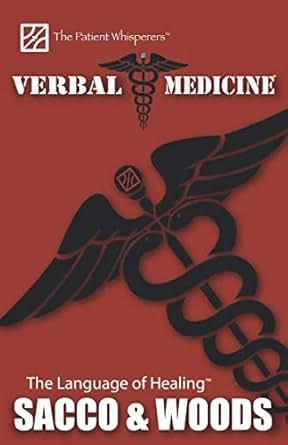
In their remarkable book Verbal Medicine: The Language of Healing, physicians and researchers Judith Sacco and Charles Woods explore just how much words matter – not just emotionally, but biologically. Working with paramedics and emergency medical staff, they found that the language used in crisis moments – calm, positive, supportive – directly influenced patient outcomes. People quite literally healed faster when the words spoken to them were compassionate and confidence-inspiring.
This is the heart of verbal healing: the intentional use of language to support emotional regulation, biological recovery, and psychological strength.
Words as Medicine – and Memory
Sacco and Woods aren’t alone in this understanding. Neuroscience has long shown that language is deeply tied to our nervous system. When someone says something threatening, unkind, or even just sharply critical, our amygdala (the brain’s alarm system) lights up. Cortisol is released. Our system goes into protective mode. Over time, repeated exposure to harsh or shaming words – especially in childhood – can create long-term physiological patterns of stress and insecurity.
But the opposite is also true. When we hear kind, reassuring, empowering words, our parasympathetic nervous system activates – the system responsible for calming us down and restoring balance, and we go into healing mode. Verbal reassurance reduces heart rate, slows breathing, and even improves digestion and immune response.
The voice can be an instrument of fear – or an instrument of peace.
It’s no wonder we use phrases like:
“That calmed me down.”
“They talked me through it.”
“Her words brought me back to myself.”
These aren’t just poetic expressions. They reflect real shifts in brain chemistry and body state.
The Emergency Voice
Sacco and Woods’ research with paramedics revealed something striking: when patients were given reassuring statements like “You’re going to be okay,” or “You’re in good hands,” their bodies responded. Their breathing regulated. Their pain perception reduced. They became more cooperative with treatment. The voice of calm became a bridge back to safety.
As a former emergency call handler, I’ve witnessed this countless times. Someone calls in panic, fear, sometimes barely able to speak. And the words I choose – their rhythm, their tone, their timing – can change everything. A phrase I often used for people threatening to harm themselves was: “This is a turning point. You called the police for a reason. You want help. And somewhere inside, you are ready for help.”
I didn’t invent that. It came from years of listening, watching, and learning what gives people strength. The words don’t just inform – they transform. They give people something to hold onto. A sense of agency. A reminder that they are not broken, and that something inside them is already working toward repair.
How Words Change the Brain
Verbal healing works because it engages multiple layers of the brain simultaneously:
The auditory cortex processes sound
The limbic system connects words to feelings
The prefrontal cortex makes meaning and plans action
The vagus nerve responds to tone and safety
When someone hears “You’re safe,” or “You can do this,” their entire nervous system can shift from hypervigilance to restoration.
But here’s where it gets even more fascinating – when we speak those words ourselves, the effect can be even more powerful.
Affirmation as Self-Directed Healing
Affirmations often get dismissed as fluffy or superficial, but there’s compelling science behind the practice of saying helpful, supportive things out loud. MRI studies have shown that self-affirmation activates the brain’s reward centres and reduces reactivity in the stress response system. When we say something positive and personally meaningful, we create new neural pathways that counterbalance habitual self-criticism or fear.
It’s not about pretending everything’s fine. It’s about offering the brain a new script – one rooted in possibility and self-trust.
I saw this in a deeply personal way during my daughter’s labour. She gave birth completely drug-free, and what got her through wasn’t just preparation — it was through hypnobirthing and affirmation. Throughout the birth, she repeated aloud:
“My body knows what to do. I am strong. I am calm. I am safe. I am naturally opening to bring a new life”
These weren’t wishful thoughts. They were tools. Her own voice became her guide – and I watched her use language to shape an experience that could have been traumatic into something empowering, joyful, even beautiful.
Language Loops: What We Say Becomes Who We Are
Whether we realise it or not, we’re always speaking to ourselves. That internal monologue – the voice that narrates our day – is a constant stream of messaging and sometimes it spills out and is verbalised. And it matters.
Phrases like:
“Awww! I’m no good at this!”
“Typical of me!”
“I always mess things up.”
…act like verbal graffiti, scrawled across the inner walls of our self-belief. But we can choose to rewrite the script. When you make an error smile at yourself gently, and saying things like:
“Well – I’m learning.”
“This is a turning point.”
“I know I am stronger than I feel right now.”
…it doesn’t deny the hard stuff – it simply speaks to a deeper truth.
We become the stories we tell ourselves – and sound is how those stories are told.
Auditory Language and Embodied Listening
Our everyday language reflects how deeply sound and hearing are linked to emotion and action. We say:
“I tuned out.”
“That chimes with me”
“They listened to me, and I heard myself differently.”
We even talk about listening to ourselves – because verbalising thoughts often helps us understand what we’re truly feeling. Articulating something aloud brings it into form, into reality. In therapy, in coaching, even just in friendship, we often don’t know what we need to say until we say it.
There’s power in hearing your own voice speak your truth – even if no one else is listening.
Chose your Words
Verbal healing isn’t a miracle cure. It’s not about pretending we’re fine or bypassing pain. It’s about meeting pain with presence — and using the sound of language to make healing more possible.
Be mindful of the words you speak – to yourself and others.
Be intentional with tone – safety often lies in how things are said.
Use affirmations that feel authentic, not forced.
When in doubt, say something kind.
And don’t underestimate the power of your own voice – it might be the sound you need to hear most.
Because words matter – so whisper encouragement, speak in an empowering way, and offer your praise – remember a single sentence can make an impact for years.
Caroline Jaine is a Resilience Guide and Creator of The Unbreakable Path
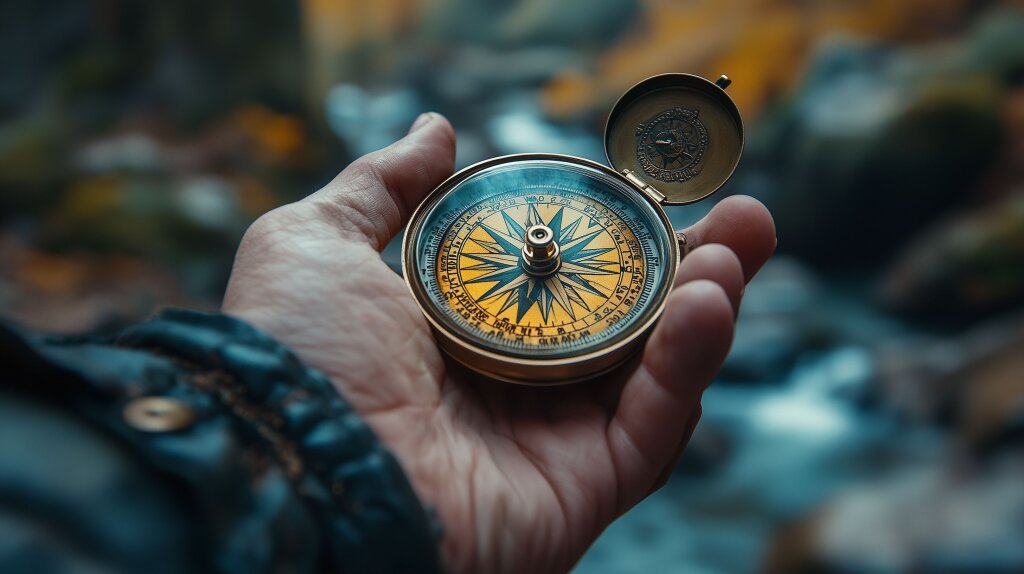
There’s a reason why people with a strong sense of purpose seem to bend, not break. When life throws its worst – grief, setbacks, stress, uncertainty – it’s often not strength or strategy that keeps us afloat. It’s meaning. Having a purpose is like having a compass during a storm. It doesn’t always make the journey easier, but it helps you keep going — especially when the path is unclear.
But what actually happens in the body and brain when we feel purposeful? And why does being disconnected from that purpose hurt so deeply?
Let’s explore what science – and life – has to say.
The Science of Purpose: Why It Literally Makes Us Stronger
Studies across psychology, neurology, and even immunology show that people who feel a sense of meaning in their lives have:
Lower cortisol levels (less chronic stress)
Stronger immune systems
Better cardiovascular health
Greater psychological wellbeing
Longer life expectancy
In one 2015 Developmental Psychology study, researchers found that people with a strong sense of purpose reported lower levels of functional disability, performed better on cognitive tests (episodic memory and speed of processing), reported better self-rated health, and fewer depressive symptoms. The report also suggested that rates of aging were reduced in those with a strong sense of purpose.
Purpose gives the brain structure. It activates the prefrontal cortex — the area linked with planning, decision-making, and emotional regulation. This means when we have purpose, we’re more resilient to distraction and stress. We’re better able to tolerate setbacks and stay motivated.
In short: purpose acts like emotional armour. It doesn’t stop the arrows from coming, but it stops them from piercing so deep.
Ikigai: The Japanese Blueprint for Meaning
The Japanese concept of Ikigai (生き甲斐), which loosely translates to “a reason for being”, embodies this beautifully. It lies at the intersection of:
What you love
What you’re good at
What the world needs
What you can be paid for
Ikigai is less about job titles or productivity, and more about living in alignment. It’s why people in Okinawa – one of the world’s Blue Zones where people regularly live beyond 100 – rise with energy each morning, even in old age. They have community, routine, purpose. They are needed.
Purpose Prevents Burnout — But Can Also Lead to It
Here’s the paradox: purpose keeps us going. But when we’re stopped from fulfilling it, that drive has nowhere to go. It’s like an engine revving hard in neutral — all the power, none of the movement. And that’s when burnout sneaks in.
If you’re someone who’s devoted your life to helping others — a teacher, a carer, a public servant, a charity worker – your sense of purpose is likely wired into your very identity. You don’t just do your job – you are your job. You’re the one who shows up, steps in, holds space.
So when:
You’re told you can’t help
The system blocks your impact
You’re asked to keep going, but without being valued
Or you’re forced to walk away from what you were born to do…
…it hurts. Deeply.
You may feel: frustrated; lost; resentful; grief-stricken; and/or burnt out.
You are not broken – this is soul fatigue – when your inner engine still longs to run, but the road’s been closed.
What Can We Do?
Name your purpose — regularly. Write it down. Speak it out loud. Let it evolve. This clarity keeps your compass sharp.
Find micro-ways to express it. If the big version of your purpose is blocked, look for small expressions:
A retired teacher mentoring one child
A burnt-out medic sharing health wisdom online
A former police officer supporting others with resilience tools Purpose doesn’t retire. It reshapes.
Create boundaries to protect it. Purpose isn’t martyrdom. If you burn out, you’re no use to anyone — especially yourself.
Build a “purpose recovery” plan. If you’ve lost touch with your sense of meaning, that’s okay. Start small.
What do I care about?
Where do I feel most alive?
What impact feels most important to me right now?
Connect with others who care. Being around purpose-driven people reawakens your own drive — and keeps you going when yours flickers.
Purpose doesn’t just make us resilient — it is resilience. It keeps us tethered when everything else feels unsteady. It whispers, “This matters.” It reminds us we are more than our wounds, and that we’re still needed.
So if you’ve been feeling flat, disconnected, or exhausted — don’t just look at your schedule. Look at your soul. Ask: What part of me is waiting to come alive again? And then gently, bravely… reconnect.
Caroline Jaine is the founder of “The Unbreakable Path” Resilience Program – a combination of science-based theory, practical solutions and guidance – based on unearthing the strong and unbreakable path that is unique to each of us. The Unbreakable Path can be delivered online in groups; on a 1-2-1 basis; or as a one week workshop for organisations.
Gratitude is often heralded as a cornerstone of wellbeing – and for good reason. It’s been linked to better sleep, reduced stress, stronger relationships, and even increased resilience. But what happens when gratitude goes too far? When it stops being a grounding, nourishing practice and becomes a disguise for self-neglect?
This is a story about balance. About the line between being thankful and being silenced – even by your own internal dialogue.
The Science of Gratitude: A Powerful Practice
Let’s start with the benefits – because they’re real, and they’re powerful.
Gratitude activates areas of the brain associated with dopamine and serotonin, two neurotransmitters that support feelings of happiness and contentment. MRI studies show that those who practice gratitude consistently have stronger neural sensitivity in the prefrontal cortex, the part of the brain associated with moral reasoning and empathy. In short: gratitude rewires your brain for joy.
Regularly giving thanks is linked to:
Lower cortisol (stress hormone) levels
Increased heart rate variability (a sign of emotional resilience)
Reduced symptoms of depression and anxiety
Improved immune function
Stronger social bonds and feelings of connection
In a world that so often asks us to focus on what’s missing – the next goal, the next crisis, the next shiny thing – pausing to appreciate what’s here, now is an act of rebellion. And one we need more of.
Ways to Practise Gratitude
Gratitude doesn’t need to be grand or Instagrammable. Some of the most effective ways to invite it into your life are beautifully simple:
Gratitude Journaling: Write down three things you’re grateful for each day. They can be big (“I have supportive friends”) or small (“The kettle boiled just as I needed tea”).
Mindful Reflection: Take a quiet moment to breathe and mentally thank someone or something that made your day lighter.
Verbal Thanks: Say it out loud. “Thank you for helping me with that.” Or even: “Thank you, body, for carrying me today.”
Gratitude Walks: As you walk, mentally name the things around you that you appreciate — trees, birdsong, fresh air, freedom.
“Bookend Gratitude”: Start and end your day with a moment of thanks. This gentle routine can completely shift your nervous system.
Group Gratitude: When me and the kids gathered together for our family meal at the end of the day, I would ask everyone to say what or who was their “ray of sunshine”. It really helped us to be thankful for things – even when times were tough.
Getting into the habit of gratitude allows you to see more of what’s good – and to build emotional endurance when life gets tough.
But… Gratitude Can Also Mask Pain
Here’s where things get more complicated.
I used to be deeply committed to gratitude. I still am – but with a caveat. For a long time, I practised it so fervently that I started ignoring things that were quietly breaking me.
I worked in a demanding environment, surrounded by people who were often dismissive, challenging, and steeped in outdated beliefs. Some were openly misogynistic. Others were clearly traumatised themselves – hardened by the nature of their work. I told myself to understand. I told myself to be grateful. Grateful I had a job. Grateful I had a purpose. Grateful to be able to serve. Grateful they’d “let me in.”
And all the while, I was slowly abandoning parts of myself.
I told myself they were “just old-school” – and that their comments weren’t personal. That they were under pressure. That I shouldn’t expect anything more. That I needed to be more resilient. That I was lucky.
I used gratitude to soothe the discomfort… …But also to silence it.
When Gratitude Turns Into Self-Gaslighting
Let’s call this what it is: toxic gratitude.
When we use gratitude to dismiss mistreatment, minimise our own needs, or excuse harmful behaviour – we cross a line. Gratitude becomes a kind of gaslighting. And sometimes, it’s us doing it to ourselves.
The voice that says “Be thankful” drowns out the voice that says “This isn’t okay.” The voice that says “At least you have a job” dismisses the one that whispers “But I’m not safe here.” The voice that says “They mean well” shames the one that says “I feel disrespected.”
So What’s the Answer? Balance.
Gratitude isn’t the enemy. It’s still one of the most beautiful, grounding practices we have.
But like any strength, it becomes a weakness when overused or misapplied.
You can:
Be grateful for your job and recognise when it’s hurting you
Appreciate someone’s effort and still hold them accountable
Give thanks for what’s good and speak up about what’s not
Practise acceptance without tolerating harm
Gratitude and boundaries are not opposites. They are companions.
A Final Thought
Gratitude is a tool — not a muzzle.
Use it to light your path, not to dim your truth. Use it to elevate what’s good, but don’t let it blind you to what needs to change.
You deserve to feel thankful. You also deserve to feel safe. You deserve to see the good. You also deserve to name the harm.
It’s not either/or. It’s both/and.
And that, in itself, is something to be deeply grateful for.
Caroline Jaine is the founder of “The Unbreakable Path” Resilience Program – a combination of science-based theory, practical solutions and guidance – based on unearthing the strong and unbreakable path that is unique to each of us. The Unbreakable Path can be delivered online in groups; on a 1-2-1 basis; or as a one week workshop for organisations.
We all know someone who always puts others first – the one who volunteers, steps up to help, and seems to radiate compassion. Maybe that person is you. But why do some people feel so compelled to give, often prioritising others’ needs over their own? Let’s dive into the psychology of life’s givers and explore why giving is both a beautiful strength and, at times, a vulnerability.
The Drive to Give
At its core, giving is wired into us. Studies in positive psychology reveal that helping others activates reward centres in the brain, releasing feel-good chemicals like dopamine and oxytocin. Giving makes us feel purposeful and connected. It strengthens our bonds with others, creating communities built on trust and empathy.
But for some, the urge to give goes deeper. Life’s givers often derive their sense of self-worth from being needed. They are the ones who find meaning in service, who thrive on making a difference, and who struggle to say “no” even when they’re exhausted.
The Wounded Healer
It’s also important to acknowledge that many who find themselves in caring and support professions – firefighters, teachers, therapists, paramedics – have often walked their own challenging paths. Research and experience alike highlight that individuals who have survived abuse, trauma, or profound hardship frequently gravitate towards roles where they can help others. At some level, their drive to support others is intertwined with their own healing journey. In helping others to heal, they often find a sense of purpose, redemption, and empowerment for themselves. It’s a powerful, if sometimes subconscious, way of transforming pain into purpose – of turning personal struggles into compassion and strength. While this makes them incredibly effective and empathetic, it also means they must be especially mindful of their own boundaries and self-care, so that their desire to help others doesn’t eclipse their own need for healing and growth.
Through their own challenges, others may have witnessed the kindness and bravery of support and emergency services personnel, and been so in awe that they are driven by a desire to emulate them. They may have been a victim of crime, so impressed by the police response that they became an officer; or have witnessed a loved one’s last days and been inspired to become a palliative nurse; or maybe someone from a troubled family, made to feel safe by a support or social worker.
Our own experiences often drive us to become one of life’s givers.
When Giving Becomes a Vulnerability
However, while giving is a positive force, it can become a double-edged sword. For some, giving can mask feelings of low self-worth: “If I’m not helping others, what value do I have?” This can lead to self-neglect, burnout, and even resentment when giving is not reciprocated or appreciated.
Givers might also struggle with boundaries. It’s easy to slip into a pattern of overextending themselves, feeling guilty for prioritising their own needs. Over time, this can erode resilience and make them vulnerable to stress, anxiety, and even depression.
A Purposeful Life
Yet, at its best, giving is a powerful source of purpose. Having a sense of purpose—a reason to get up in the morning—has been linked to better physical health, increased happiness, and a longer life. Purpose helps us navigate adversity with greater resilience, reminding us that our efforts matter.
For life’s givers, the key is balance. By recognising their own needs and setting healthy boundaries, they can continue to give without burning out. After all, we can’t pour from an empty cup.
Celebrating the Giver in You
If you’re a natural giver, embrace it as a gift. Your compassion and generosity make the world a better place. But also remember that you deserve care, too. Prioritising self-worth and purpose means not just giving to others, but also giving to yourself – time to rest, time to dream, and time to grow.
So here’s to the givers: the everyday heroes who light up lives, lift burdens, and remind us all what it means to be human. May your kindness continue to shine -and may you always find the strength to give from a place of balance and joy.
Caroline Jaine is the founder of “The Unbreakable Path” Resilience Program – a combination of science-based theory, practical solutions and guidance – based on unearthing the strong and unbreakable path that is unique to each of us. The Unbreakable Path can be delivered online in groups; on a 1-2-1 basis; or as a one week workshop for organisations.
“Caz Jaine faced danger, isolation and even assault when she took a foreign office role in Basra during the ‘reconstruction’ phase of the Iraq war. But she thrived on the adrenalin of conflict zones – and was later diagnosed with ‘post-traumatic development’… As she explains to Olly Mann in this wide-ranging conversation, her subsequent experiences as a Police emergency call handler led her to broaden her self-care and resilience. Now a meditation teacher, Caz takes police officers on forest retreats, and advocates passionately for culture change and emotional support within blue light professions”.
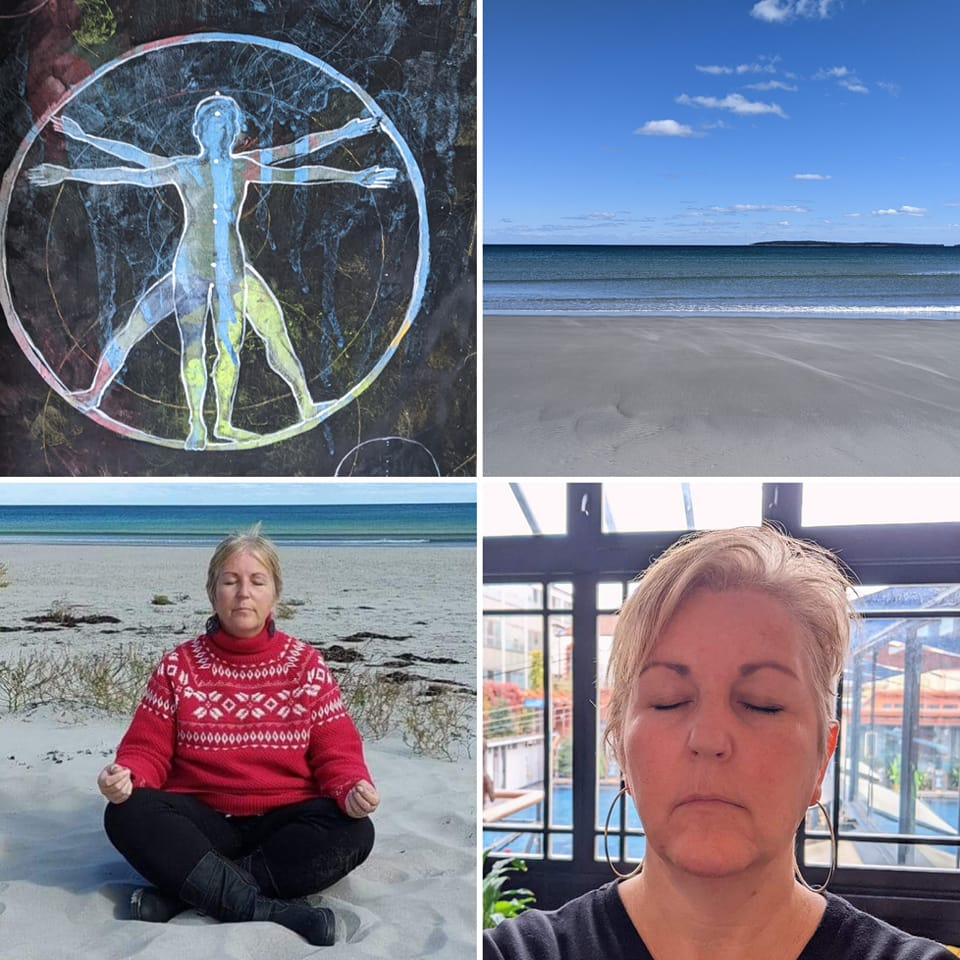
I have written before about how the 2020 Covid lockdown had a positive impact on me, especially in terms of research into the science behind healing. (Read more) Perhaps what I haven’t shared is that a lot of my epiphanies came from deep, long sessions of meditation – somtimes for up to eight hours long.
Over the past year I have been running hour long Introduction to Meditation classes and ongoing guided meditation sessions for groups of public service workers – many of them with jobs in the emergency services. It has been well received and I find it a calming, relaxing experience myself.
Aside from this personal experience there is lots of research about the benefits of meditation. There is a growing body of evidence that consistently associates mindfulness with certain changes in the structure and function of the brain, as well as changes in behavior. This suggests that mindfulness can have a positive effect on our thoughts and feelings, including reducing fear and pain. Research concludes that mindfulness-based therapy may be useful in altering affective and cognitive processes that underlie multiple clinical issues. These findings are consistent with evidence that mindfulness meditation increases positive affect and decreases anxiety and negative affect.
A study by the National Centre for Complimentary and Integrative Health shows that meditation was as effective as prolonged exposure therapy at reducing PTSD symptoms and depression, and it was more effective than PTSD health education. The veterans who used meditation also showed improvement in mood and overall quality of life. It can also strengthen areas of your brain responsible for memory, learning, attention and self-awareness.
WHAT EXACLTY IS MEDITATION?
Many people don’t fully understand the notion of “mindfulness” or meditation. Some think it is a simply requirement to empty your mind and “think of nothing”. Others think it is just about focussing on breath. Some give up after just a few minutes as their mind wanders and they cannot “sit still”.
In fact, there are very many ways to meditate and in tuition I offer, there is an explanation and introduction to three basic categories of meditation or “brain training”: mindfulness (or focussed); transcendental meditation (TM); and compassion-based meditation. The benefits that each type of meditation has is explained and insight provided into the areas of the brain that can be improved using different techniques. Much like going to the gym, different exercises have different benefits. When considering what is right for you, it is also important to look at environmental considerations, resilience building techniques (grounding) and body position – you don’t have to sit on the floor cross legged, as some think.
RESOURCES
There is a confusing array of “mindful apps” and Youtube meditations out there – it is near impossible to find what resonates with you. My top tips at the moment are:
· For a down to earth and slightly sweary Irishman who has amazing knowledge on the benefits of meditation try Niall Breslin, who does an excellent podcast called “Where is my Mind” (I found it on Spotify). His focus is more on mindfulness. I enjoy his hour long podcasts, more than his guided meditation, but he may work for you. He guides at a quite fast pace, which can work for over-active minds.
· Deepak Chopra’s 21 day programme also on Spotify is worth a listen. His approach combines all three types of meditation – but mostly compassion based with some TM techniques. He also speaks a lot about abundance, which may or may not resonate with you.
· If you are interested in TM – then I recommend 1 Giant Mind app as a starting point. Just a warning on TM – as it works so well, it has been monetised and you can pay up over £500 to be trained in it!
I have been practicing meditation and Qigong for over 20 years and the Covid Lockdown gave me the space and time to qualify as a Reiki practitioner and take my meditation so much further.
If you would like to take the conversation further, or you are intersted in guidance or classes, let me know. I am considering offering online guided sessions in the near future.
Looking for Tigers – and other tales from curious placesis a collection of short stories. Describing unusual adventures in the UK, Iraq, Pakistan, India, Sri Lanka and beyond – this collection of stories may span the globe, but Caroline’s curious places are more a state of mind, an “openness of being”.







 CarolineJaine.com