
The Quiet Power of Verbal Healing
We all remember something someone once said to us. A whispered encouragement, a casual cruelty, a single sentence that stuck – perhaps for years. Words land. They imprint. They shape the stories we tell ourselves, the decisions we make, and even how we heal.
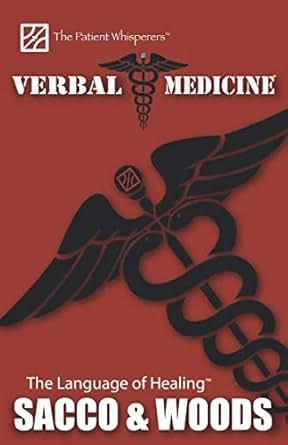
In their remarkable book Verbal Medicine: The Language of Healing, physicians and researchers Judith Sacco and Charles Woods explore just how much words matter – not just emotionally, but biologically. Working with paramedics and emergency medical staff, they found that the language used in crisis moments – calm, positive, supportive – directly influenced patient outcomes. People quite literally healed faster when the words spoken to them were compassionate and confidence-inspiring.
This is the heart of verbal healing: the intentional use of language to support emotional regulation, biological recovery, and psychological strength.
Words as Medicine – and Memory
Sacco and Woods aren’t alone in this understanding. Neuroscience has long shown that language is deeply tied to our nervous system. When someone says something threatening, unkind, or even just sharply critical, our amygdala (the brain’s alarm system) lights up. Cortisol is released. Our system goes into protective mode. Over time, repeated exposure to harsh or shaming words – especially in childhood – can create long-term physiological patterns of stress and insecurity.
But the opposite is also true. When we hear kind, reassuring, empowering words, our parasympathetic nervous system activates – the system responsible for calming us down and restoring balance, and we go into healing mode. Verbal reassurance reduces heart rate, slows breathing, and even improves digestion and immune response.
The voice can be an instrument of fear – or an instrument of peace.
It’s no wonder we use phrases like:
- “That calmed me down.”
- “They talked me through it.”
- “Her words brought me back to myself.”
These aren’t just poetic expressions. They reflect real shifts in brain chemistry and body state.
The Emergency Voice
Sacco and Woods’ research with paramedics revealed something striking: when patients were given reassuring statements like “You’re going to be okay,” or “You’re in good hands,” their bodies responded. Their breathing regulated. Their pain perception reduced. They became more cooperative with treatment. The voice of calm became a bridge back to safety.

As a former emergency call handler, I’ve witnessed this countless times. Someone calls in panic, fear, sometimes barely able to speak. And the words I choose – their rhythm, their tone, their timing – can change everything. A phrase I often used for people threatening to harm themselves was: “This is a turning point. You called the police for a reason. You want help. And somewhere inside, you are ready for help.”
I didn’t invent that. It came from years of listening, watching, and learning what gives people strength. The words don’t just inform – they transform. They give people something to hold onto. A sense of agency. A reminder that they are not broken, and that something inside them is already working toward repair.
How Words Change the Brain
Verbal healing works because it engages multiple layers of the brain simultaneously:
- The auditory cortex processes sound
- The limbic system connects words to feelings
- The prefrontal cortex makes meaning and plans action
- The vagus nerve responds to tone and safety
When someone hears “You’re safe,” or “You can do this,” their entire nervous system can shift from hypervigilance to restoration.
But here’s where it gets even more fascinating – when we speak those words ourselves, the effect can be even more powerful.
Affirmation as Self-Directed Healing
Affirmations often get dismissed as fluffy or superficial, but there’s compelling science behind the practice of saying helpful, supportive things out loud. MRI studies have shown that self-affirmation activates the brain’s reward centres and reduces reactivity in the stress response system. When we say something positive and personally meaningful, we create new neural pathways that counterbalance habitual self-criticism or fear.
It’s not about pretending everything’s fine. It’s about offering the brain a new script – one rooted in possibility and self-trust.
I saw this in a deeply personal way during my daughter’s labour. She gave birth completely drug-free, and what got her through wasn’t just preparation — it was through hypnobirthing and affirmation. Throughout the birth, she repeated aloud:
“My body knows what to do. I am strong. I am calm. I am safe. I am naturally opening to bring a new life”
These weren’t wishful thoughts. They were tools. Her own voice became her guide – and I watched her use language to shape an experience that could have been traumatic into something empowering, joyful, even beautiful.
Language Loops: What We Say Becomes Who We Are

Whether we realise it or not, we’re always speaking to ourselves. That internal monologue – the voice that narrates our day – is a constant stream of messaging and sometimes it spills out and is verbalised. And it matters.
Phrases like:
- “Awww! I’m no good at this!”
- “Typical of me!”
- “I always mess things up.”
…act like verbal graffiti, scrawled across the inner walls of our self-belief. But we can choose to rewrite the script. When you make an error smile at yourself gently, and saying things like:
- “Well – I’m learning.”
- “This is a turning point.”
- “I know I am stronger than I feel right now.”
…it doesn’t deny the hard stuff – it simply speaks to a deeper truth.
We become the stories we tell ourselves – and sound is how those stories are told.
Auditory Language and Embodied Listening
Our everyday language reflects how deeply sound and hearing are linked to emotion and action. We say:
- “I tuned out.”
- “That chimes with me”
- “They listened to me, and I heard myself differently.”
We even talk about listening to ourselves – because verbalising thoughts often helps us understand what we’re truly feeling. Articulating something aloud brings it into form, into reality. In therapy, in coaching, even just in friendship, we often don’t know what we need to say until we say it.
There’s power in hearing your own voice speak your truth – even if no one else is listening.
Chose your Words
Verbal healing isn’t a miracle cure. It’s not about pretending we’re fine or bypassing pain. It’s about meeting pain with presence — and using the sound of language to make healing more possible.
- Be mindful of the words you speak – to yourself and others.
- Be intentional with tone – safety often lies in how things are said.
- Use affirmations that feel authentic, not forced.
- When in doubt, say something kind.
- And don’t underestimate the power of your own voice – it might be the sound you need to hear most.
Because words matter – so whisper encouragement, speak in an empowering way, and offer your praise – remember a single sentence can make an impact for years.
Caroline Jaine is a Resilience Guide and Creator of The Unbreakable Path
 www.CarolineJaine.com
One thought on “Words That Heal, Words That Hurt”